Upcoming EU customs charges for B2C shipments from 1st November 2026 

In addition to the standard €3 flat customs duty (introduced in July 2026), a €2 customs handling fee applies to every unique item in a low value parcel (under €150) starting from 1st November 2026.  

Flat customs duty: €3 per parcel 

Customs handling fee: €2 per unique item 

Example:  

  • 1 unique item = €5 total (€3 customs duty + €2 handling fee) 
  • 2 unique items = €7 total (€3 customs duty + €4 handling fee) 
  • 3 unique items = €9 total (€3 customs duty + €6 handling fee) 
Contents of shipmentCustoms dutyHandling feeTotal
1 item   (e.g. 1 book)€3 (1 tariff line)€2 (1 tariff line)€5
2 identical items   (e.g. 2 identical t-shirts under 1 HS code)€3 (1 tariff line)€2 (1 tariff line)€5
2 different items   (e.g. 1 book + 1 t-shirt = 2 different HS codes)€6 (2 tariff lines)€4 (2 tariff lines)€10
3 different items   (e.g. book + t-shirt + toy = 3 different HS codes)€9 (3 tariff lines)€6 (3 tariff lines)€15
PID CategoryNameDescription
M-PIDMerchant Product IdentifierYour internal store/merchant SKU or product code
NS-PIDNon-standardised Manufacturer Product IdentifierThe factory part number, model or style number
S-PIDStandard Manufacturer Product IdentifierInternationally recognised standard codes (e.g. GTIN, ISBN, EAN)

Product Identifier (PID)

To ensure smooth customs clearance, every item in your B2C shipment requires a Product Identifier (PID) from the 1st November. Depending on your setup this will be: 

  • M-PID: Merchant Product Identifier 
  • NS-PID: Non-standardised Manufacturer Product Identifier  
  • S-PID: Standard Manufacturer Product Identifier 

When booking with Evri, all required PID information is gathered automatically during the booking process. You will not need to manually process or update PID fields yourself.  

A side profile view shows an Evri branded lorry is driving along a straight road with an aeroplane that can be seen closely above.

What are EU customs charges?

When you send a parcel from the UK to an EU country, your parcel needs to go through customs before it can be delivered.  

Depending on the destination, contents and value of your parcel, the recipient may need to pay customs duties, import VAT or other charges before the parcel can be delivered. The price you pay Evri covers the international delivery service, but it doesn’t cover any customs, duties or taxes that may be due.  

EU customs changes from July 2026

From 1 July 2026, new EU customs rules affect low value ecommerce shipments entering the EU.   A €3 customs duty per item or tariff line now applies to eligible shipments valued at €150 or less. This means the charge is based on the number of different items or tariff lines declared, rather than simply being one charge per parcel.

Your contentsApplied customs duty
1 item type (1 HS code)€3
3 different item types (3 HS codes)€9
3 of the exact same item (1 HS code)€3

Who pays EU customs charges?

Usually, the recipient is responsible for paying customs charges and duties once the parcel arrives in the destination country. While online sellers can collect VAT at the point of sale (using schemes like IOSS). Customs duties and carrier handling fees are separate charges that cannot be paid through IOSS and may still be collected upon delivery.  

When you send a parcel with Evri, the price you pay covers the delivery service. Custom duties, taxes and other charges are separate from the delivery price.  

For some destinations and shipments, Evri gives you the option to pay applicable taxes and duties on your recipient’s behalf when booking.  

What is IOSS? 

If you’re a business or online seller sending goods to customers in the EU, you may be able to use the Import One Stop Shop (IOSS) scheme. IOSS is an online VAT registration scheme. IOSS allows the business to collect VAT at the point of sale for goods sent to the EU with a value of up to €150.  

What does this mean for your business and customers? 

  • Simpler checkouts and improved customer experience  
  • Less returns for you, with no hidden charges, you are less likely to experience items being returned 
  • No hidden charges for your customers 
  • Faster transit times and clearance customs 

How to register for IOSS as a business? 

If you register for an IOSS, you can appoint an intermediary to take care of the admin. On your behalf, they will: 

  • Submit monthly IOSS VAT returns showing the value of goods sold, the VAT rates applied, and the total VAT due for each EU country, separated into standard and reduced rate categories. 
  • Arrange payment of any VAT liabilities reported in the monthly IOSS return.  

If you’re selling through an online marketplace such as Shopify or Etsy, you can use their IOSS information at checkout with Evri. 

Type of saleValue of goods
Goods sold to EU consumers on my own website€150 (£135) or less
Goods sold to EU consumers on a marketplace€150 (£135) or less
Goods sold to EU consumers on own websiteMore than €150 (£135)
Goods sold to EU consumers on a marketplaceMore than €150 (£135)
Goods sold to a business in the EU (B2B)Any

Are gifts subject to EU customs charges? 

Gifts can also be subject to customs charges when they’re sent from the UK to the EU.  

Under the 2026 changes, gifts valued at less than €45 are not subject to the additional duty described in Evri’s EU customs update. Gifts valued at €45 or more may be subject to additional duty. 

It’s still important to provide accurate information about the contents and value of your gift when booking a parcel. 

What customs information do I need to provide? 

You’ll need to provide accurate details about what you’re sending, including:  

  • A clear description of the goods 
  • The value of the goods 
  • The quantity of each item 
  • The country of origin where required 
  • The appropriate HS code 

For parcels sent outside the UK, Evri’s booking process provides suggested HS codes based on the description of the goods you enter. You can also search for an HS code manually during the booking process. 

What is a HS code? 

A HS code is a code used by customs authorities to classify items and goods. HS codes help customs to identify items and determine the appropriate fees.  

When you book an international parcel with Evri, you don’t necessarily need to look up the code yourself. Evri’s international booking system gives you HS code suggestions based on the description you enter of your items. You can choose to enter HS codes manually if you prefer.  

What is an EORI number? 

All businesses that are VAT registered must provide an EORI number when booking international parcel deliveries. The EORI number (Economic Operator Registration and Identification) is an identification number which customs will use to identify who has sent their parcels and all their parcels across all EU countries.  

You can apply for an EORI number from the links below: 

If you are VAT registered, please click here. 

If you are not VAT registered, please click here. 

How can I avoid delays at customs? 

Providing accurate parcel information can help your parcel move through the customs process more smoothly.  

Before sending your parcel, make sure:  

  • Your recipient’s address is correct 
  • You’ve declared the correct value of your parcel 
  • Your item descriptions are accurate  
  • You’ve provided the correct HS codes 
  • Your customs information is complete 
  • Your parcel meets Evri’s international sending requirements 

Incorrect information can result in your parcel being held at customs, potentially causing delays and additional charges outside of Evri’s control.  

What happens if the recipient doesn’t pay the customs charges? 

If the recipient does not pay the customs charges, Evri will do its best to return the parcel to the sender.  

However, international returns from customs are not guaranteed. Depending on the destination country’s rules, a parcel could potentially be held or disposed of by local authorities.  

The original shipping cost cannot be refunded where a parcel is returned because applicable taxes or duties have not been paid. Additional fees may also apply.  

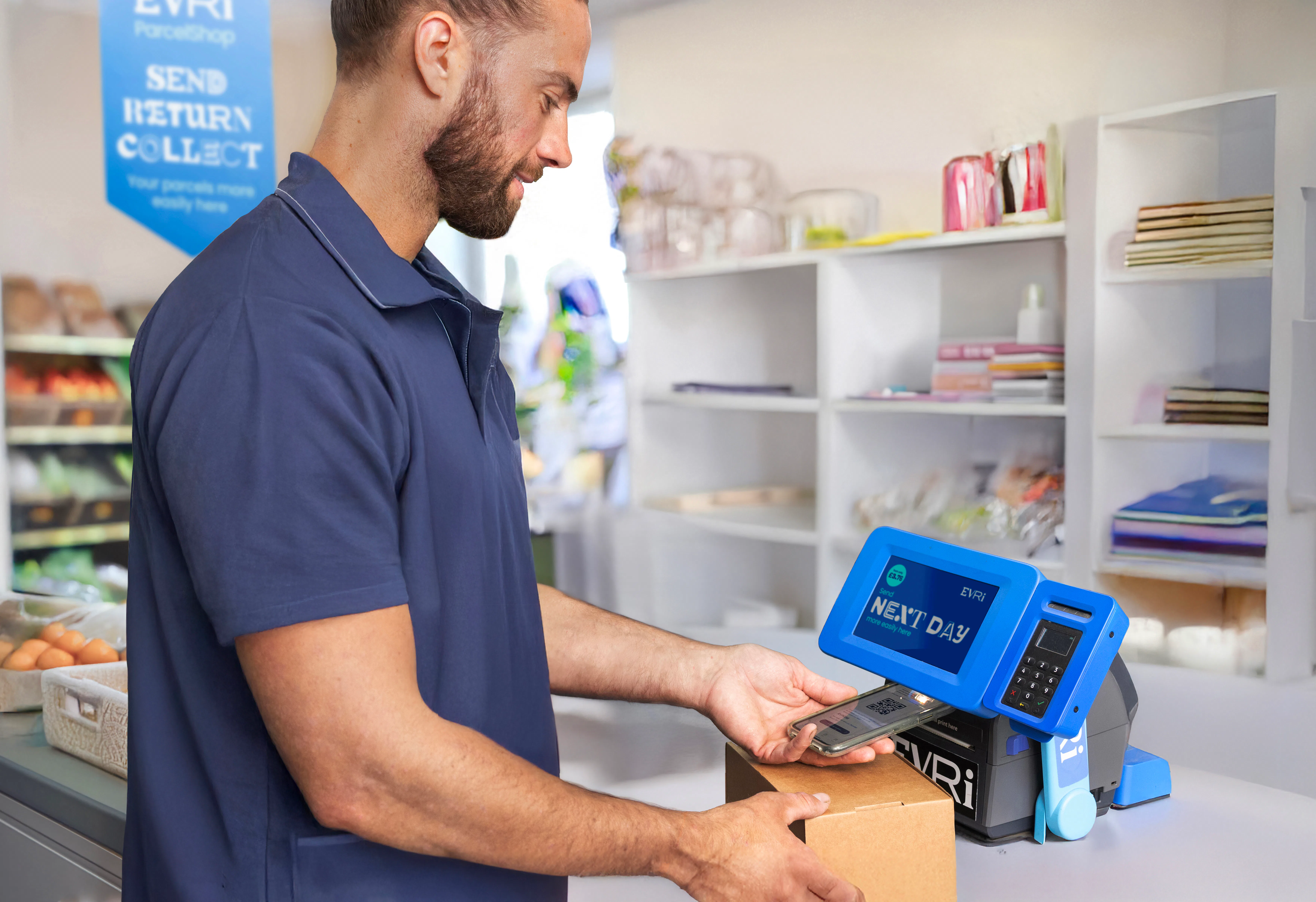
Customer in a ParcelShop store scanning their parcel's QR code using a Print in Store device to print their label for sending.

Sending a parcel to the EU with Evri

When you send a parcel with Evri, we’ll guide you through the information needed during the booking process.  

Remember to: 

  1. Check what you’re sending 
  2. Enter accurate parcel and customs information 
  3. Provide clear descriptions of your items 
  4. Check whether IOSS applies to your shipment 
  5. Make sure your recipient understands that customs charges apply 

With the right information provided at the point of booking, you can help your parcel move through customs as smoothly as possible. 

Send your parcel with Evri

Customs charges FAQs