ESG: Environment
Reducing our impact on the planet
Reducing our impact on the planet


Net zero by 2040 for direct and indirect carbon emissions across Evri Group

28% of our fleet is now low-carbon or electric, as we continue to scale zero-emission technologies
We have made strong progress in 2025/26. Fundamental ESG principles – to reduce our impact on the planet, promote equality and fairness, and increase transparency around our operation – are now embedded in our business model, management objectives and company culture as we deliver for all stakeholders. Responsible delivery remains fundamental to our strategy and reflects our core values of ‘doing the right thing’ and ‘delivering for customers’.
This is our first year reporting Evri Group's carbon footprint — combining Evri, Coll‑8 and Evri Premium — giving a more complete view of our emissions as we work towards net zero by 2040.
427 electric vehicles now in our fleet (17%), plus 266 low-carbon Bio‑CNG/Bio‑LNG vehicles (10%) — together making up 28% of our total fleet. In May 2025 we also launched a Courier EV support scheme, helping self-employed couriers switch to electric vehicles.

100% renewable electricity across our operations, backed by REGO certificates, with on-site solar generation now at 11 locations.
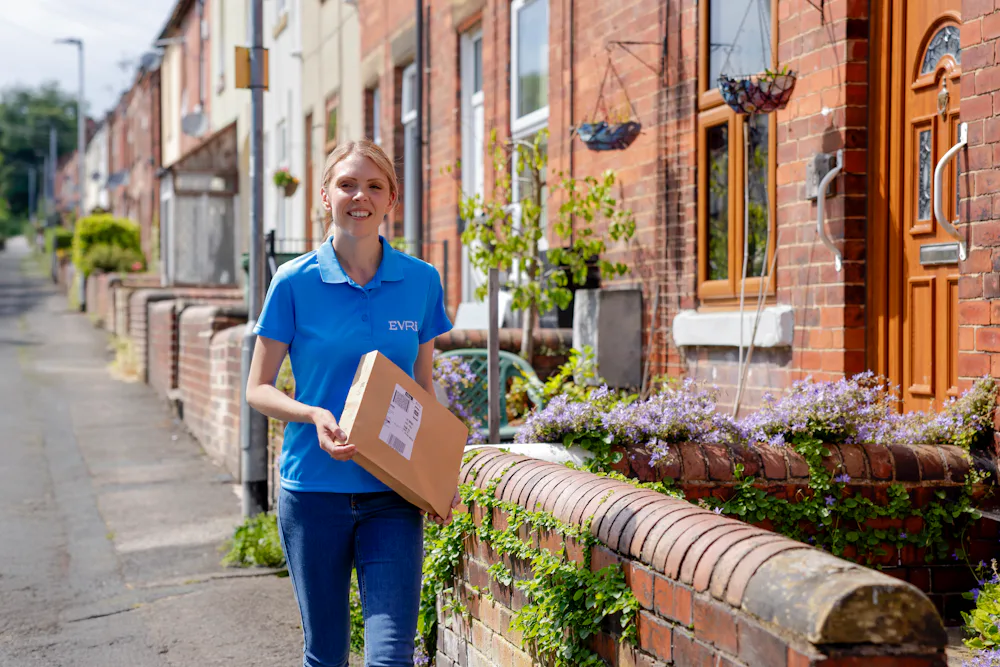
This year, we're reporting our carbon footprint at Group level for the first time, combining Evri Limited, Coll‑8 and Evri Premium following their acquisition during 2025/26. This gives a more comprehensive view of emissions across our operations and supports greater transparency in how we track and manage them.
As this is a transitional year of reporting, these figures aren't directly comparable to prior years, which covered Evri Limited only. FY2026/27 will be our first full year of reporting for the enlarged Group, and will serve as the baseline against which we measure future performance.
We use an ISO 14064-certified carbon accounting system, generating monthly reports shared with clients and senior leadership, helping us track performance against our Scope 1, 2 and 3 emissions.
| Scope | Evri Limited (tCO2e) | Coll-8 (tCO2e) | Evri Premium (tCO2e) |
|---|---|---|---|
| Scope 1 | 83,919 | 118 | 17,388 |
| Scope 2 (marked-based) | 0 | 0 | 0 |
| Scope 3 - all categories reported | 213,799 | 5,553 | 47,604 |
| Total Scope 1,2 & 3 (marked-based) | 297,718 | 5,670 | 64,993 |
| Energy consumption (kWh) | 449,983,430 | 1,517,724 | 83,043,424 |
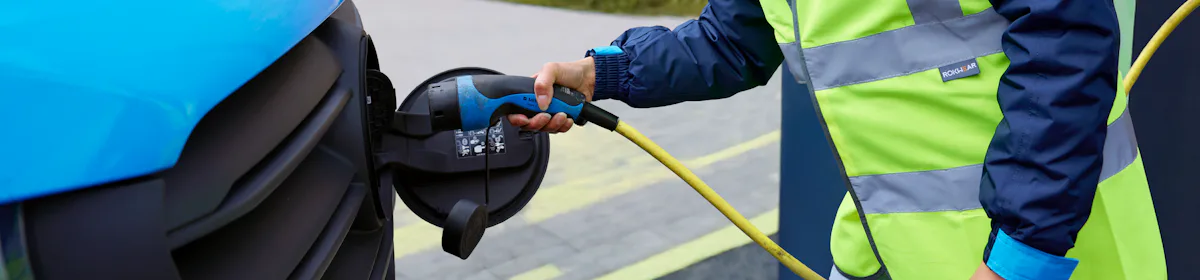
Decarbonising a business of our scale and operational complexity requires clear targets and consistent progress across both our operations and our wider value chain. We've set an ambitious goal to reach net zero in our direct and indirect carbon emissions by 2040, with a key focus on transforming our fleet through lower-carbon and zero-emission technologies.
As of February 2026, low-carbon vehicles — including those powered by Bio‑CNG and Bio‑LNG — total 266 units, representing 10% of our overall fleet. Our electric fleet has grown to 427 vehicles (17%), including electric vans, e-cargo bikes and electric rigid vehicles. Together, low-carbon and electric vehicles now make up 28% of our fleet.
Courier EV scheme: Launched in May 2025, our Courier EV support scheme helps couriers switch to electric vehicles more affordably, offering financial support towards both vehicle running costs and charging infrastructure over a defined period. This extends our decarbonisation efforts beyond our directly controlled fleet, reducing emissions, air pollution and noise in the communities we serve.
We've also updated our company car policy so all new cars must be hybrid or electric, and continue to invest in charging infrastructure at our hubs, including Rugby.
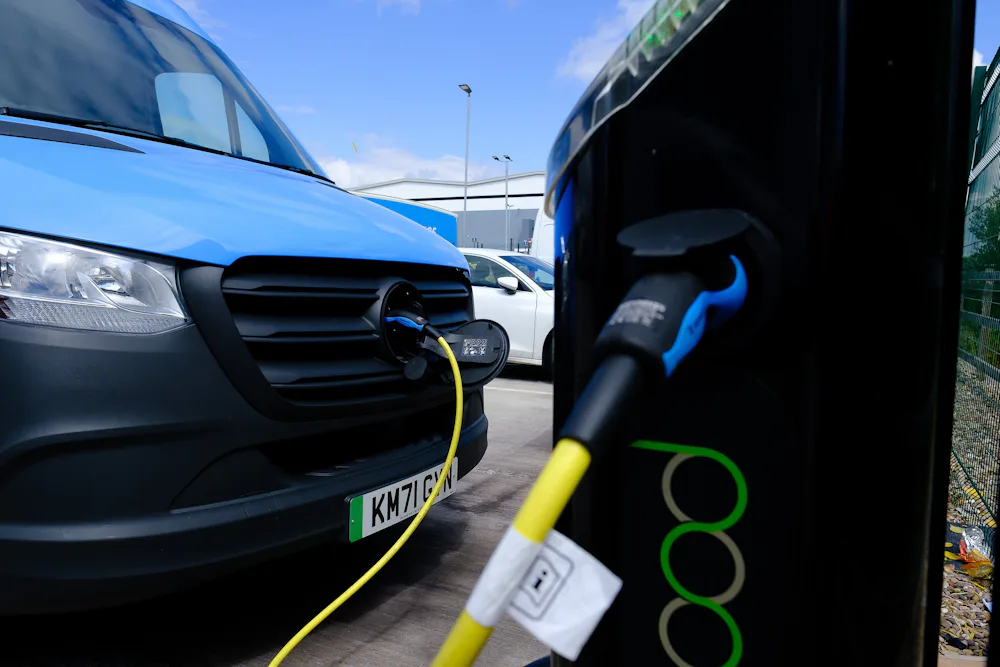
Switching to zero-emission vehicles reduces our contribution to air pollution, though some sources — like brake pads and tyres — will remain regardless of fuel type. Electric vans have zero tailpipe emissions, reducing pollutants such as nitrogen oxides (NOx) and particulate matter, and are also significantly quieter than diesel models, helping to reduce noise pollution in the urban areas where it matters most to residents.
For our remaining diesel and petrol vans, we use telemetry data to reduce idling time — which can produce up to twice as many tailpipe emissions as an active engine. We also work with local authorities on urban air quality and congestion initiatives.
Inside our hubs, we're updating our occupational noise assessments at sites with large sortation equipment — including a completed assessment at our Rugby hub and a planned assessment at Warrington. From 2026/27, we'll introduce routine on-site engineering checks each quarter, and continue exploring engineering controls to reduce noise at source.
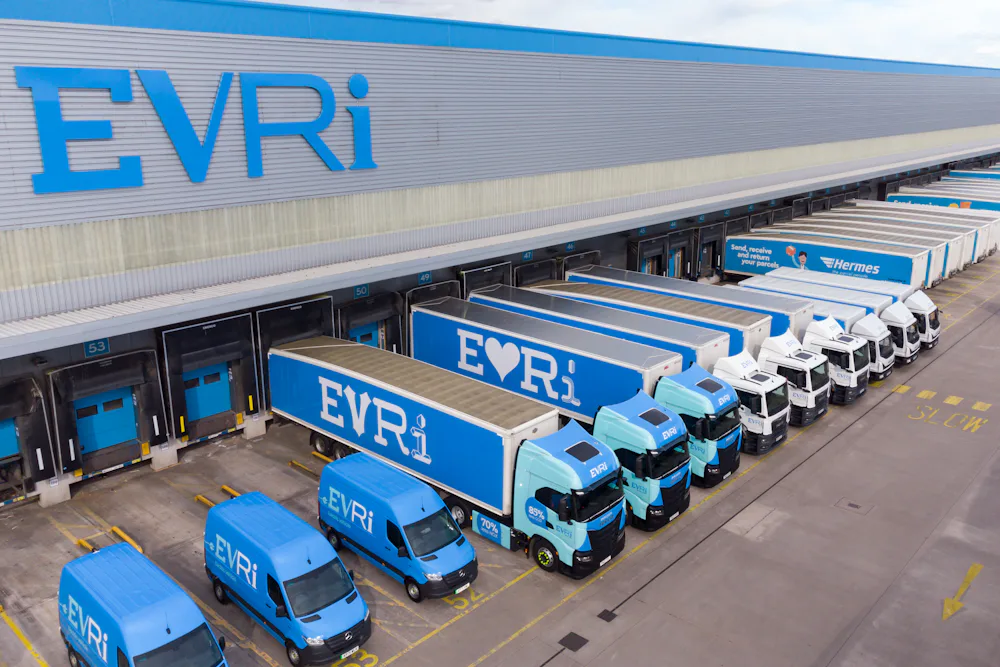
Our infrastructure of hubs, depots and delivery units is a key part of our roadmap to become a low-carbon delivery business. We've converted 100% of our purchased electricity to REGO-backed (Renewable Energy Guarantee of Origin) UK renewables — including solar, wind and hydropower — across our whole operation.
Our flagship 55-acre 'superhub' at Barnsley, which opened in 2022, includes solar panels, rainwater harvesting and acoustic bunds to reduce noise pollution, alongside a substantial biodiversity area supporting local wildlife and more than 25,000 newly planted trees and hedgerows.
We're continuing to invest in energy efficiency across our estate, including ongoing LED lighting upgrades, enhancements to building management systems, and exploring HVAC optimisation to reduce overall consumption. On-site renewable generation is also growing, with solar panels now installed at 11 locations, and audits underway to identify further opportunities to expand solar capacity.
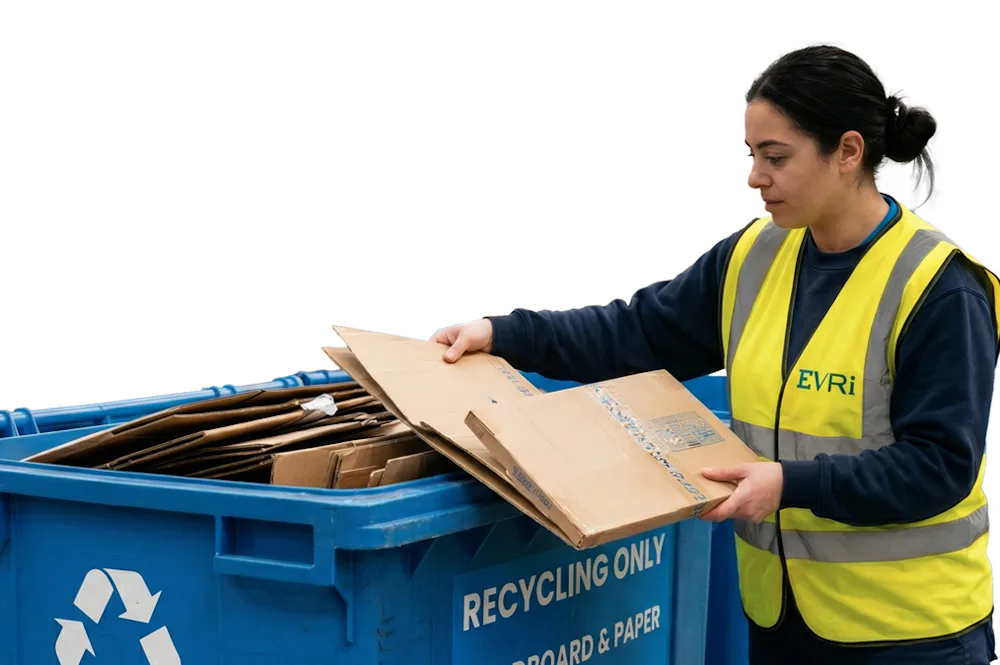
We continue to audit our hubs and depots, prioritising locations performing below recycling targets. Site visits review waste sources, contamination levels, employee behaviours, and — new this year — waste volume per parcel, helping us benchmark performance and improve segregation at source.
Our recycling targets remain 85% at hubs and 50% at depots, aligned with our zero-waste-to-landfill commitment. We're relaunching employee training on waste handling and segregation, supported by new site signage and initiatives such as 'Reuse a Box', and we work with clients to help minimise incoming waste. Monthly waste reports and KPIs are monitored by our ESG Steering Committee to ensure ongoing visibility and accountability.
We continue to invest in upgraded baling equipment, improved site infrastructure, and stronger partnerships with waste specialists to support consistent segregation and recycling quality across all Evri Group sites.
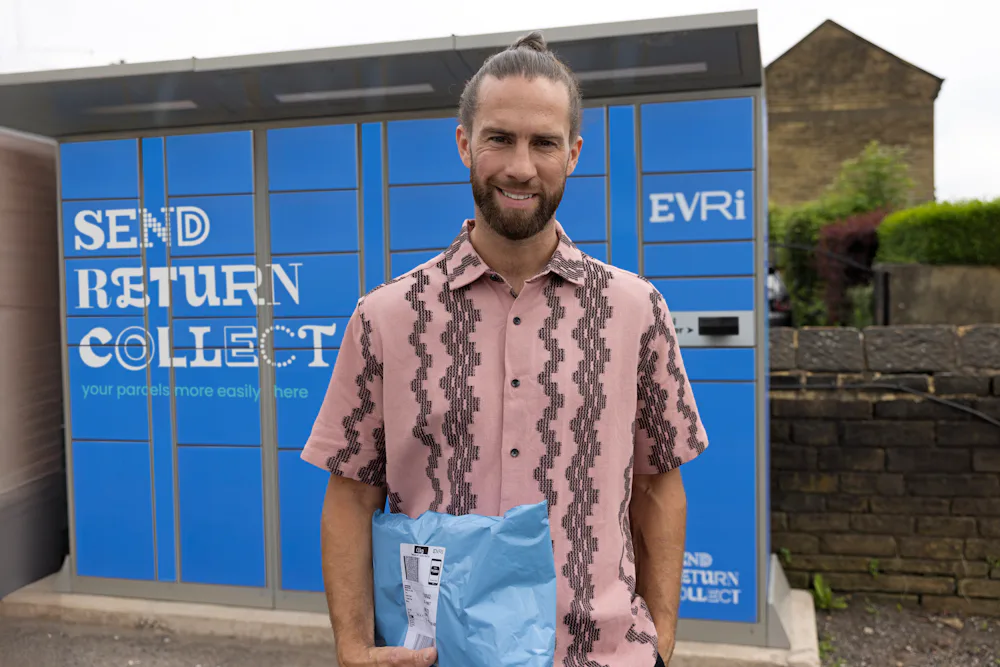
Customers can divert their parcel earlier in its journey – before it’s even on the road. Out of home is a priority because delivery/collection via ParcelShops and Lockers could reduce a parcel’s carbon footprint by on average 27%*. *Based on data from March 2025 - February 2026, vs a standard courier delivery
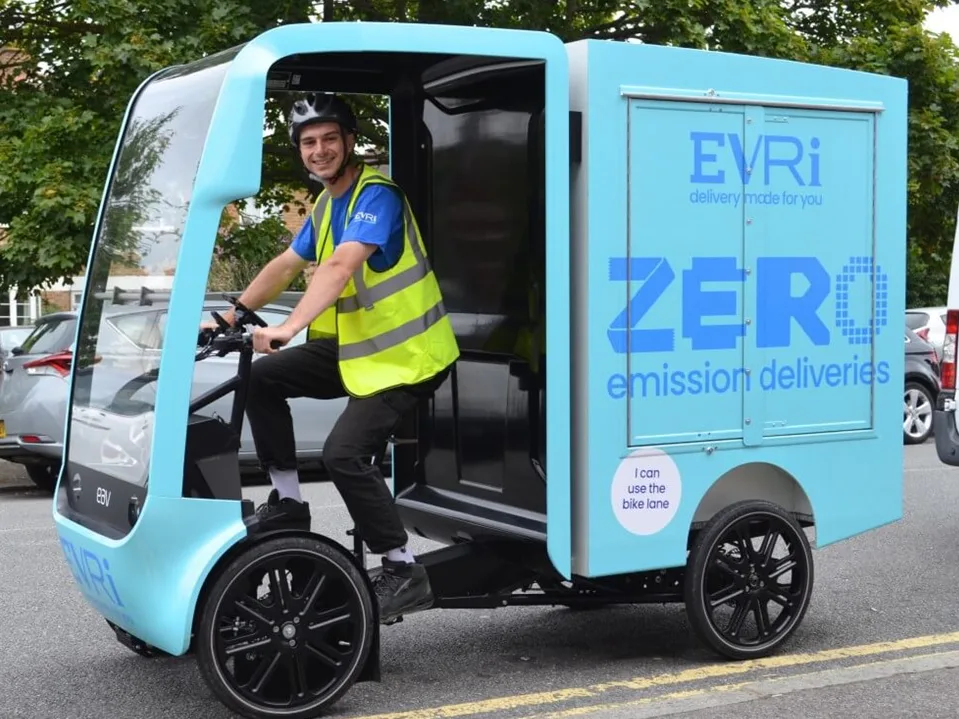
We saw continued expansion of zero-emission final-mile delivery solutions, particularly in urban areas, and brought additional electric bikes into the fleet. In 2024/25, e-cargo bikes were used in various major UK locations, including Bristol, Edinburgh, London, Manchester, Oxford and Cambridge. In 2024/25, we delivered over 1,000,000 parcels this way. There will be a further roll-out of e-cargo bikes in 2025/26.

Which means fewer delivery attempts and less time on the road. Through enhanced tracking capabilities, geofencing and ‘Parcel Vision’ technology, we've seen consistent growth in our first-time delivery accuracy metrics.